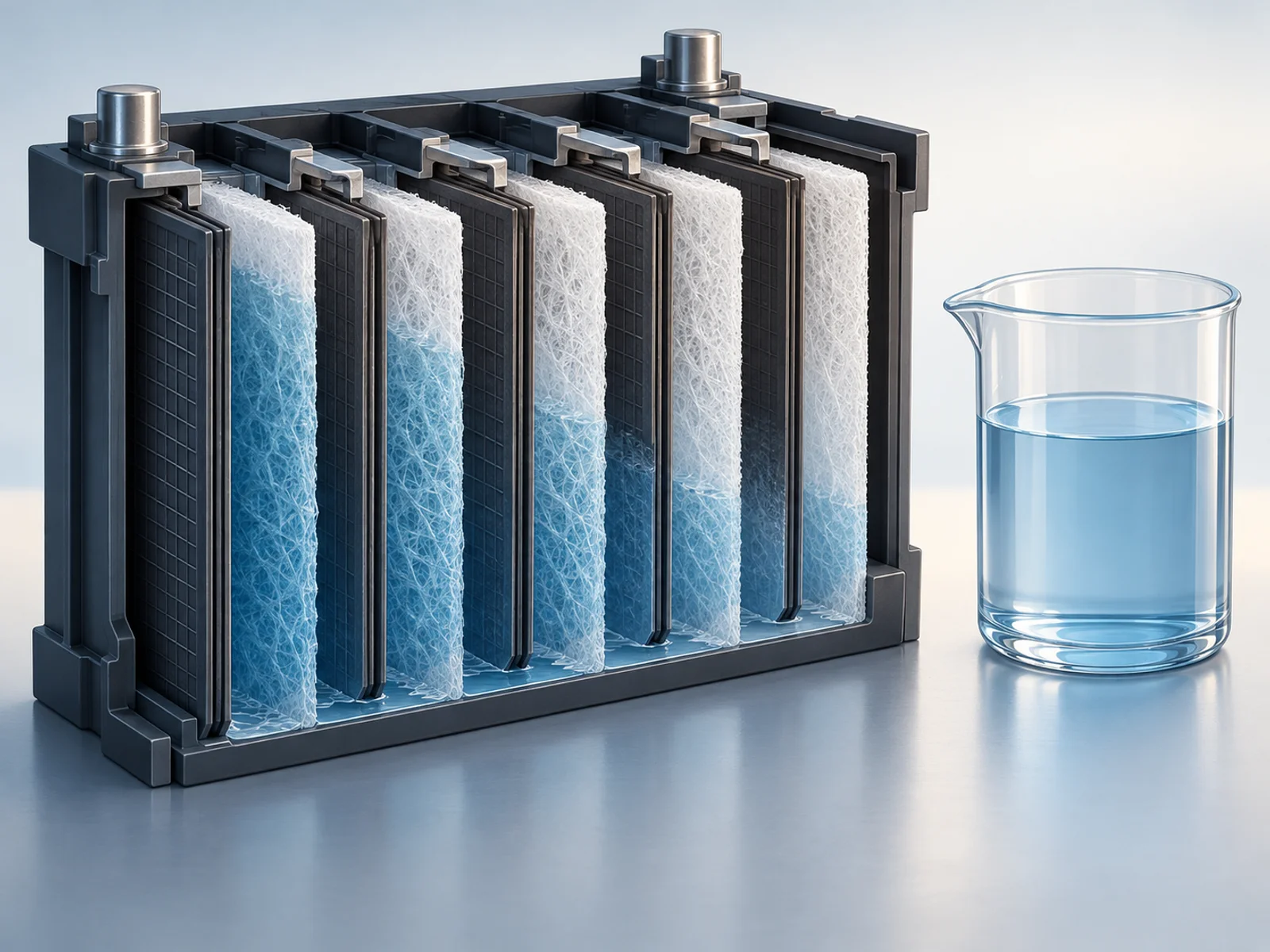
A correct acid dose does not establish uniform internal wetting. Keep quantity, process and distribution evidence distinct so a filling trial answers the question being tested.
One quantity cannot answer two questions
One quantity cannot answer two questions
Electrolyte must move through the glass-fiber separator and plate structure. Tall plate groups, indirect flow paths and trapped gas can complicate movement. Metering records show how much acid was delivered, but not its path, the speed of internal wetting or its distribution. Battery structure, separator characteristics and the actual filling process must be considered together.
Keep three records for three purposes
Keep three records for three purposes
Acid-volume records compare delivered dose with the process setting; they do not demonstrate uniformity. Process records capture filling time, equipment program, conditions, abnormal pauses and vacuum stages where used; a completed program or shorter time does not prove full wet-out. Wet-out results require a manufacturer-agreed method under comparable plate-group, acid and observation conditions, documenting different areas and dry or dark spots. Design and production teams define acceptance criteria; this is not a universal test standard.
Attribute the separator example to its supplier
Attribute the separator example to its supplier
H&V describes PowerFill as AGM with surface channels supporting acid flow and trapped-gas release. It reports faster filling, more uniform distribution and fewer dry or dark spots than standard AGM in its own filling tests. These are H&V product statements and reported results, not Viking findings or evidence that every separator performs the same way. The public description alone is not a complete project-specific test protocol.
Control the variable being evaluated
Control the variable being evaluated
For a material trial, use plate groups of the same batch and structure where practical, and keep acid formulation, equipment settings and subsequent rest conditions consistent. When testing a separator surface structure, avoid simultaneous material or equipment changes. When adjusting the process, hold the separator batch fixed. Compare both filling records and wet-out results to reduce incorrect attribution.
Record when and how wet-out is observed
Record when and how wet-out is observed
Record observation time and assessment method. Wet-out immediately after filling can differ from the condition after a defined rest or later production step. If using photographs, area records or an established line method, keep sampling positions and observation conditions consistent. The battery manufacturer defines acceptance against product requirements; no single observation method applies to every project.
Bring the evidence back to the battery design
Bring the evidence back to the battery design
Validate findings within the intended battery structure and process. A standalone absorption value, one fill record or a supplier statement cannot independently establish improved complete-battery capacity, service life or performance. If dose meets the setting but wet-out differs, review the program, gas-release path, plate-group structure and separator surface; if process records changed, first confirm comparability. Final decisions follow the manufacturer’s design validation and quality requirements.