

One battery, one monitoring point is a useful procurement question. The case highlights the value of observing individual units after installation; it does not establish an industry-wide trend or diagnose the old batteries.
Public procurement case
What the September 24 notice lists
The University of Chinese Academy of Sciences UPS replacement notice published on China’s government procurement website on September 24, 2026 lists 272 sets of 12V 250Ah VRLA batteries and 272 individual monitoring modules for internal resistance and voltage. The scope also includes UPS replacement, monitoring deployment, installation and commissioning. These are published requirements, not evidence that work is complete.
Scope boundary
Equal quantities are a procurement requirement, not a field result
The matched quantities are consistent with one monitoring point per battery. The notice does not establish the final wiring, sampling frequency, alarm thresholds, old-battery failure cause or operating results. It specifies VRLA, which alone does not confirm an AGM design. This single case does not show how widely the configuration is adopted or imply a Viking supply relationship.
Monitoring evidence
Individual readings identify questions for investigation
A normal string voltage does not establish that every battery is in the same condition. Individual voltage and internal-resistance records can help identify differences and when they appeared. They are investigation inputs, not a diagnosis. Review connections, charging conditions, temperature and service history alongside string-level charge-discharge behavior and complete-battery tests; no universal alarm threshold is proposed here.
Service consistency
Consistency needs review after delivery
Factory capacity and resistance checks describe a point in time. Float charging, temperature, connections and actual discharge events can change the installed group. Service review should ask whether divergence persists and whether maintenance changes the trend. Comparable records need the same measurement method and operating context; procurement of monitoring hardware alone does not prove a continuous, reliable data history.
AGM material boundary
AGM data supports verification, not system diagnosis
Where the battery actually uses AGM, the separator supports electrolyte retention, ion transport and plate-group contact. Thickness, basis weight, absorption, compression state and batch variation are relevant material inputs. They cannot establish whole-battery resistance, voltage or life. Plates, acid, assembly, welded connections and use conditions also matter. An unusual monitored value cannot be attributed directly to the separator.
Traceable records
Link site, battery and separator records
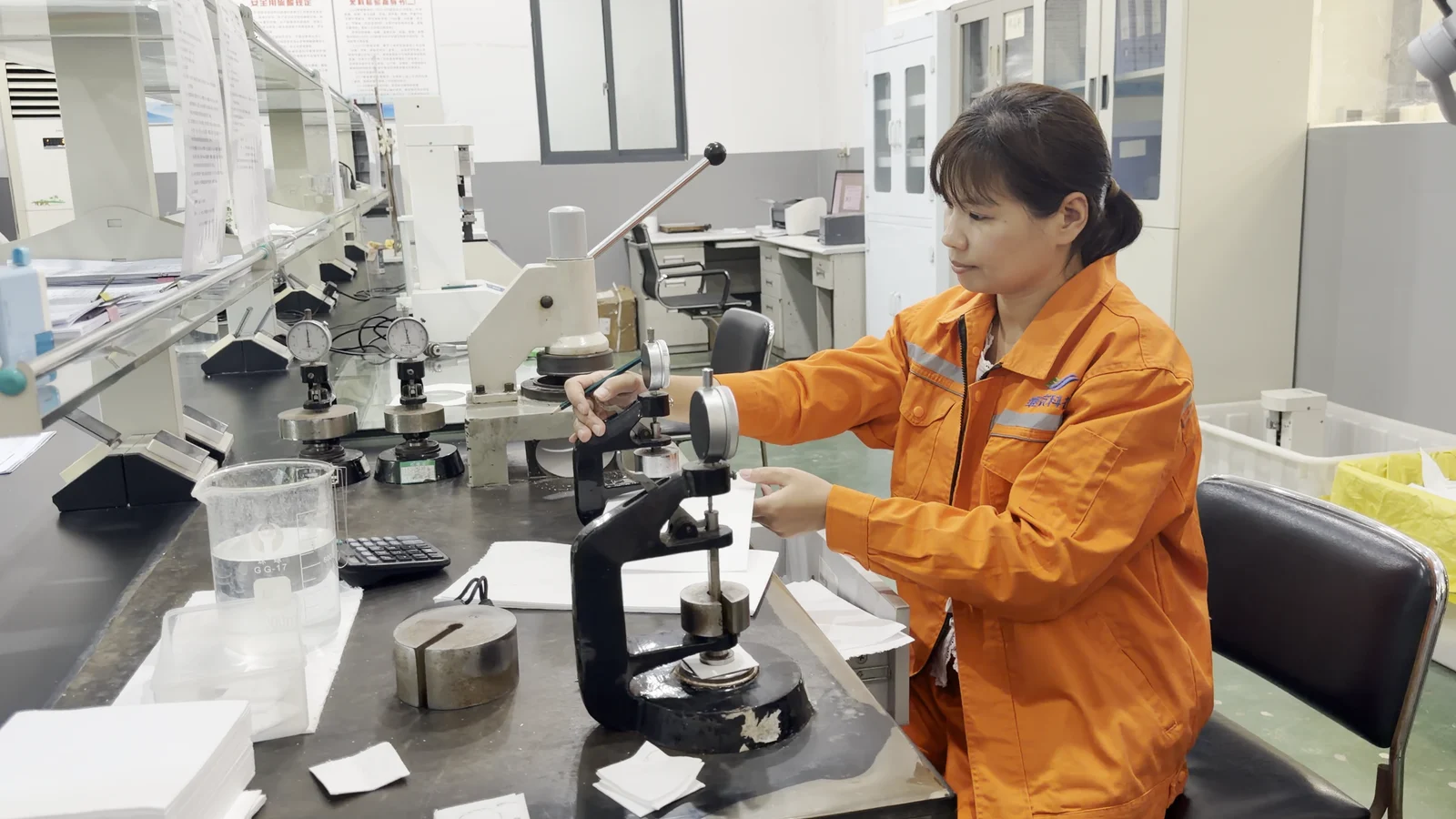
Link battery model, serial number, installation position and monitoring point with measurement times and review records. Retain battery manufacturing and test batches, plus separator batch, material data and supply records. Viking supplies AGM rolls and sheets and can discuss thickness, width, sheet dimensions, packaging and available batch documentation for defined VRLA projects. Material records help battery manufacturers investigate; battery and system validation remain necessary.
Site
Map each battery position to its monitoring point.
Operating history
Record individual readings with time and conditions.
Battery
Keep manufacturing identity and complete-battery results.
AGM material
Retain batch identity, methods and specification records.