
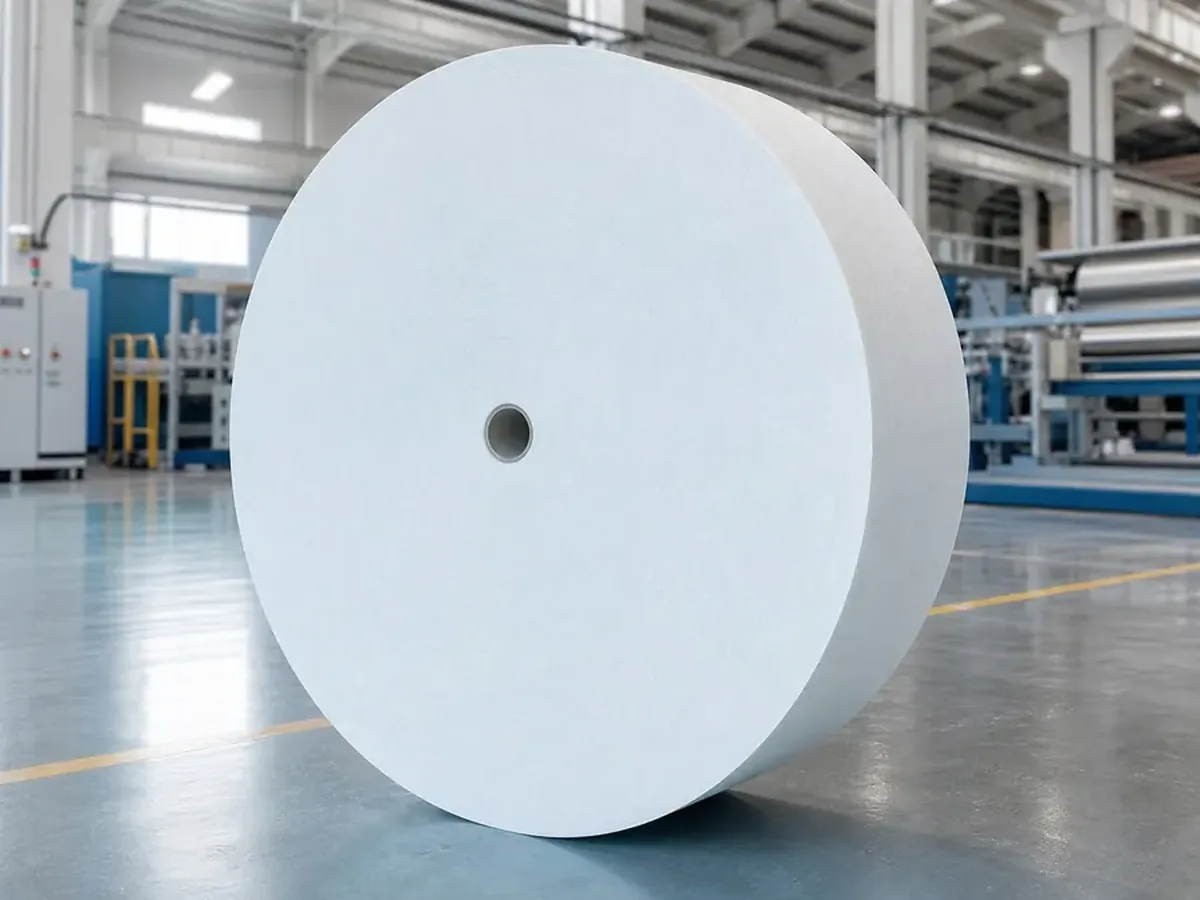
Asking whether AGM or PVC is the better battery separator starts with the wrong comparison. The material route needs to match the battery structure, electrolyte condition and assembly design.
In this article, PVC battery separator means a microporous PVC or PVC-silica separator used in lead-acid batteries, not an ordinary rigid PVC sheet. Hubei Viking manufactures AGM glass fiber separators for VRLA batteries; the PVC discussion is provided to help buyers identify the correct material route.
Quick Comparison
The main differences are connected with the battery system
Material structure
- AGM glass fiber separator
- A porous nonwoven mat mainly formed from ultra-fine glass fibers.
- Microporous PVC separator
- A microporous membrane based on PVC or PVC-silica, often with ribs or a defined surface profile.
Common battery system
- AGM glass fiber separator
- VRLA-AGM valve-regulated lead-acid batteries.
- Microporous PVC separator
- Flooded industrial lead-acid batteries and selected gel or application-specific designs.
Electrolyte condition
- AGM glass fiber separator
- The separator absorbs and retains the electrolyte.
- Microporous PVC separator
- The electrolyte normally remains free-flowing or is immobilized by a separate gel system.
Primary role
- AGM glass fiber separator
- Plate separation, electrolyte retention, ionic transport, oxygen transfer and plate-group constraint.
- Microporous PVC separator
- Plate separation, ionic transport, plate spacing and provision of acid volume between plates.
Assembly focus
- AGM glass fiber separator
- Thickness under compression, recovery, absorption behavior and uniformity.
- Microporous PVC separator
- Backweb and overall thickness, rib height and direction, pore structure, wettability and mechanical strength.
Direct replacement
- AGM glass fiber separator
- Normally not a direct substitute for PVC without battery-system validation.
- Microporous PVC separator
- Normally not a direct substitute for AGM without battery-system validation.
01 · Electrolyte Management
Start by understanding how the electrolyte is held inside the battery
In a typical flooded lead-acid battery, the plates are immersed in electrolyte that can move freely. A microporous separator prevents plate contact while retaining ion-conducting paths and the required spacing between electrodes. In a VRLA-AGM battery, the electrolyte is absorbed and immobilized in the porous glass-fiber network, so the separator becomes part of the electrolyte-management system.
02 · AGM Structure
AGM performance depends on absorption and compression together
AGM stands for Absorbent Glass Mat. Its fiber network retains electrolyte, supports ionic movement and provides gas pathways used by the VRLA oxygen-recombination process. Once installed between the plates, compression changes separator thickness, contact and local electrolyte distribution. Natural thickness alone is therefore not enough to evaluate fit.
03 · PVC Profile
Microporous PVC selection depends on pore structure and surface profile
A microporous PVC separator does not perform the same whole-mat absorption function as AGM, but it still needs chemical resistance and open ionic pathways. Ribs can maintain electrode spacing and acid volume, while profile direction and dimensions affect positioning and assembly. A PVC specification may therefore need backweb thickness, total thickness, rib geometry, porosity, resistance, wettability and delivery format.
04 · Replacement Boundary
Similar dimensions do not make the two materials interchangeable
A VRLA-AGM battery is designed around electrolyte quantity, plate-group compression, oxygen recombination and valve-regulated operation. Flooded or gel designs using microporous separators make different assumptions about acid volume, plate spacing and maintenance. Changing separator material can require review of acid filling, group dimensions, housing space, charging conditions and validation tests.
05 · Buyer Review
Select the separator by following the battery project, not the material name
First confirm whether the project is VRLA-AGM, flooded or gel. Then define the separator function, assembly process, roll or sheet requirement and the characteristics that must remain stable in later batches. This approach is more useful than comparing one thickness, price or electrical-resistance value without the wider battery design.
06 · Viking Coordination
For confirmed VRLA-AGM projects, start with specification matching
Hubei Viking focuses on AGM glass fiber separator rolls and sheets for VRLA lead-acid batteries. When the battery route is confirmed as VRLA-AGM, we can review the application, target thickness, roll width or sheet size, project stage, sample needs and packing requirements before discussing continued supply.
Battery system
Confirm VRLA-AGM, flooded or gel before comparing separator materials.
Electrolyte condition
Define whether the separator must retain electrolyte or work with free or gelled acid.
Assembly process
Share plate-group design, compression conditions and roll or sheet handling.
Dimensions
Provide target thickness, width, sheet size and any existing reference sample.
Validation stage
Clarify whether the project is in design, sampling, trial assembly or volume production.
Batch priorities
Identify the absorption, fit, handling or consistency concern that matters most.