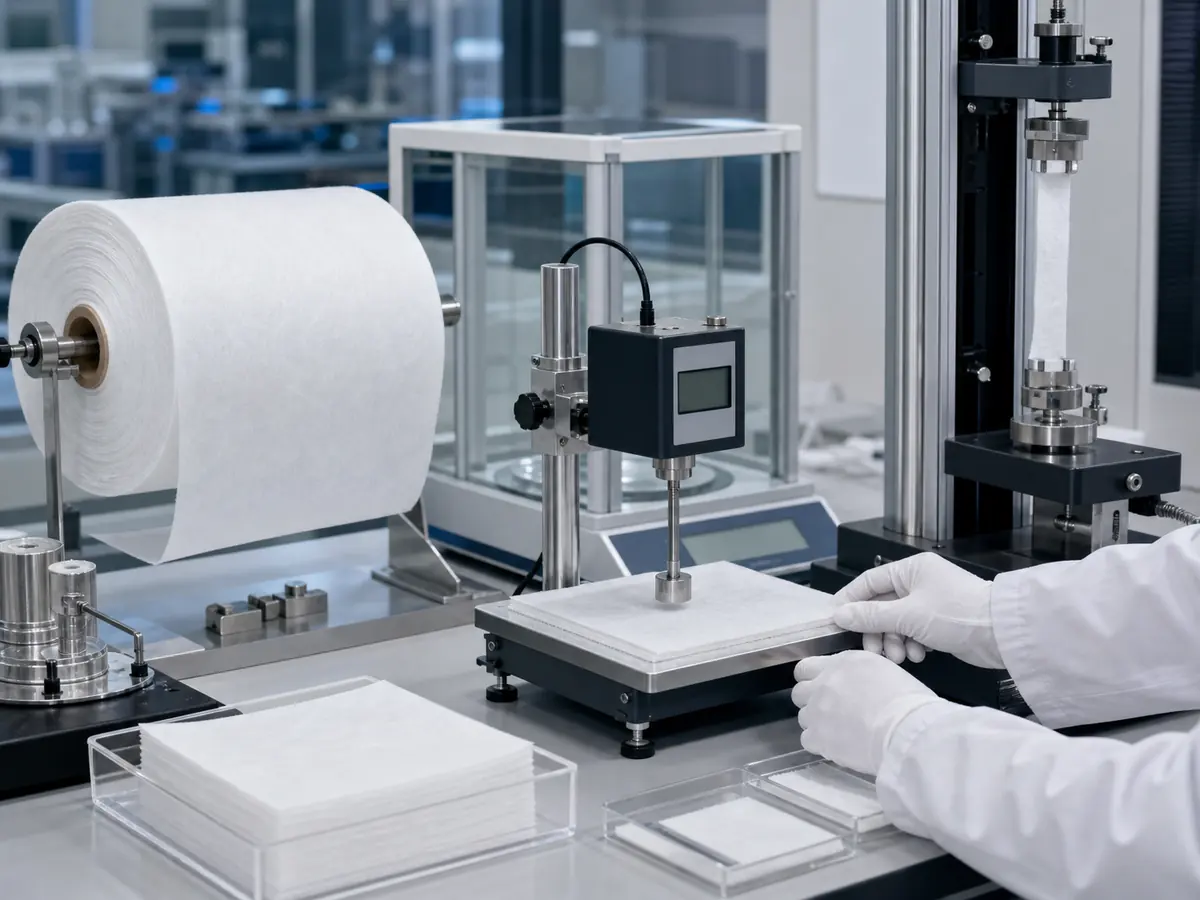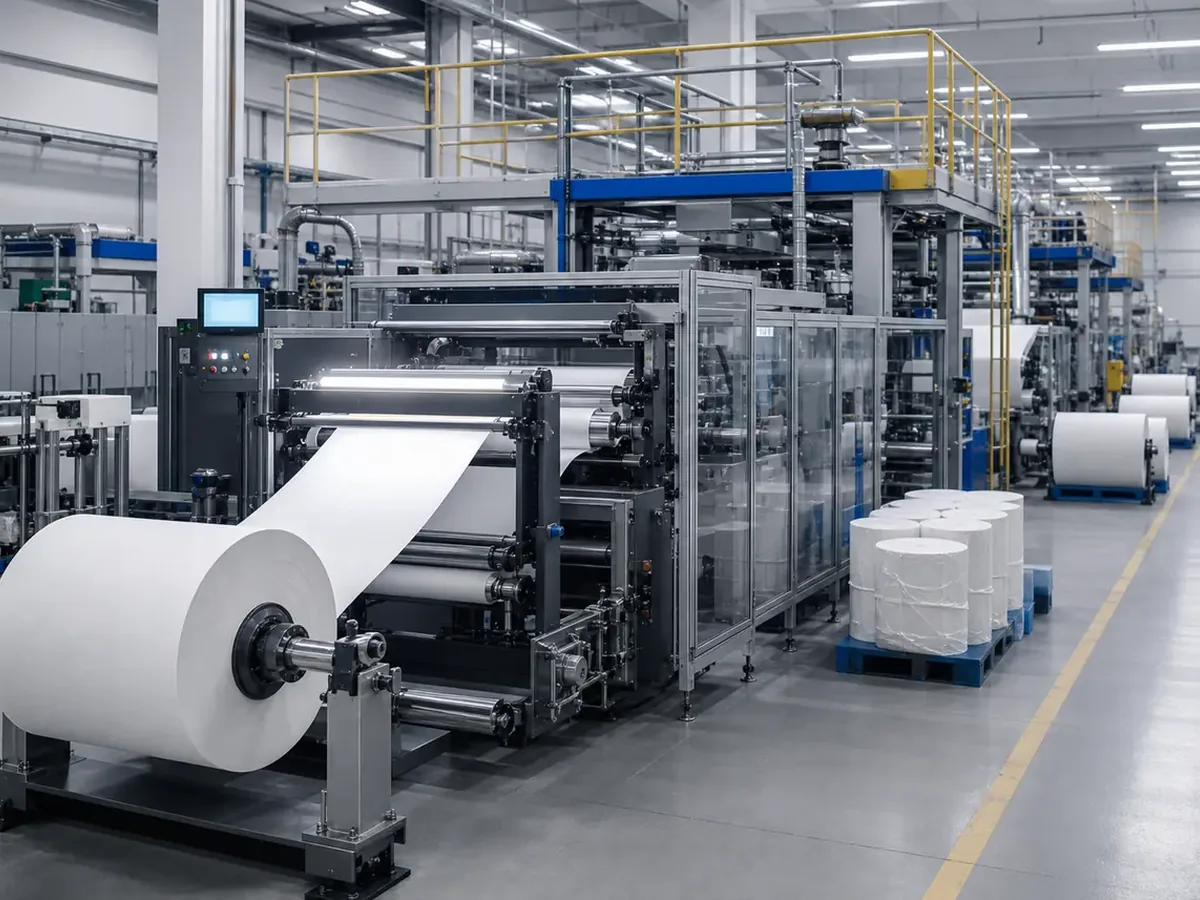
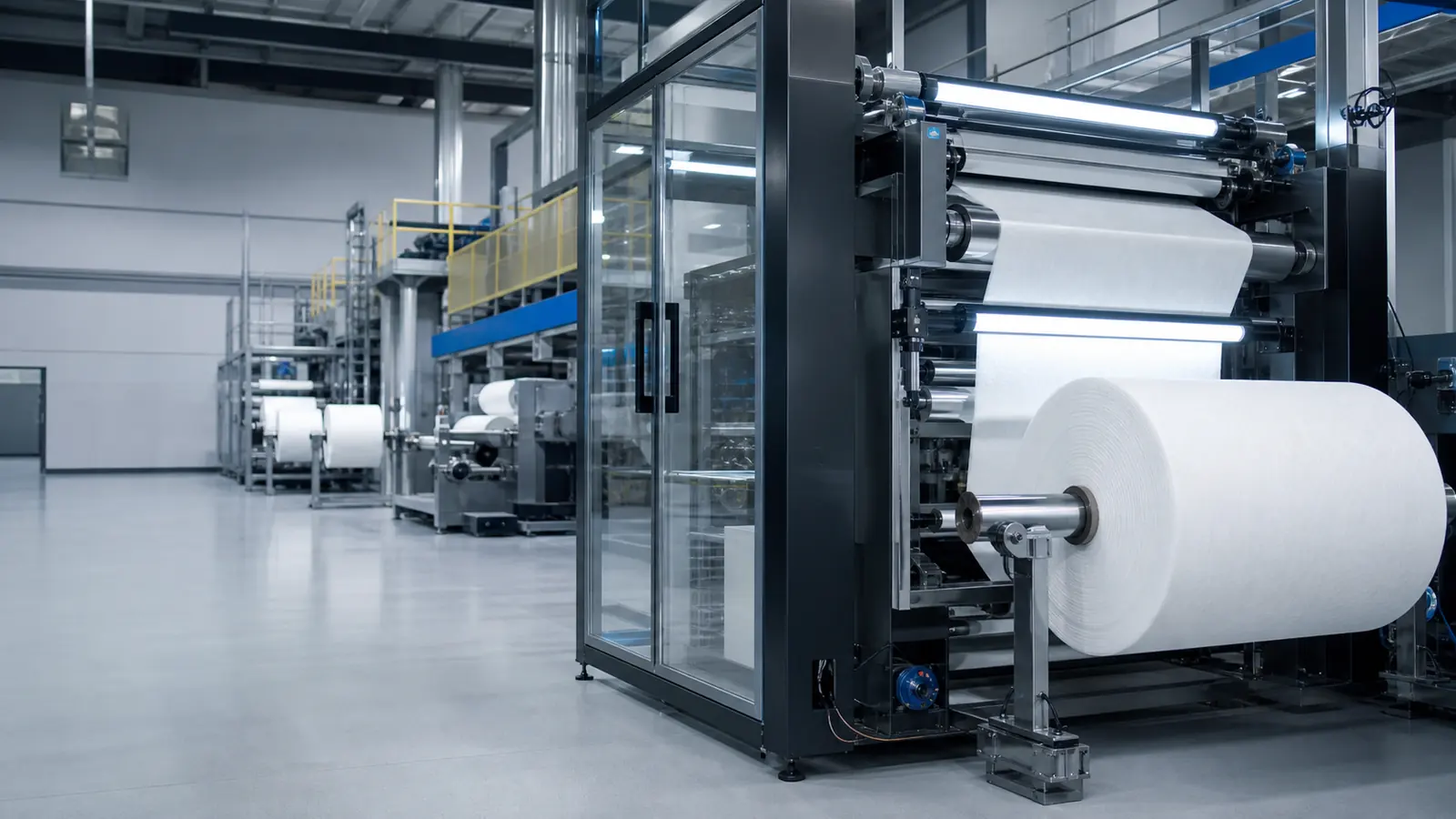
An AGM separator may arrive as a finished roll or a cut sheet, but its suitability for VRLA battery production begins earlier. The supply chain normally spans glass preparation, ultrafine fiber conversion, slurry preparation, wet-laid forming, drying, winding, inspection, slitting or sheeting, packing and shipment.
Public company materials in the AGM sector describe parts of this chain, but they should not be read as one universal factory process or as proof of a supplier's quality system. For buyers, the practical issue is whether the material, process controls and delivery records can support the agreed battery design repeatedly.
Starting Material
The chain begins before separator making
AGM separator production depends on a glass composition suitable for conversion into very fine fibers. Public sector materials commonly describe glass blocks or glass feedstock, followed by ultrafine glass fiber wool and AGM separator products. This sequence is useful for understanding the material path, but it does not mean every supplier uses identical glass chemistry, equipment or acceptance criteria. The relevant question is whether incoming material controls and change communication are adequate for the project.
Fiber Condition
Fine glass fiber must become a controlled furnish
Before a separator web is formed, fiber preparation and dispersion determine the furnish entering the wet-laid process. Fiber length distribution, clumps, foreign material and moisture condition can change how the web forms and handles later. A buyer does not need to prescribe a supplier's internal recipe, but should align the properties that matter for the battery design and ask how material changes are identified before they reach an approved specification.
Wet-Laid Forming
A separator web is formed, not simply cut from a fiber roll
AGM separator is generally made through a wet-laid process in which dispersed glass fibers are formed into a continuous web, then dewatered and dried. Production-line descriptions from the sector refer to pulping, forming, drying and winding stages. The finished material therefore reflects the interaction of fiber furnish and process conditions, not just a nominal thickness printed on a specification sheet.
Conversion
Drying, winding and cutting are part of the delivered material
After web formation, drying and winding establish the roll that will later be handled, slit or converted into sheets. Roll width, edge condition, winding quality, core, diameter and sheet dimensions affect feeding and assembly at the battery factory. These conversion details should be agreed as part of the product form, because a material that passes laboratory checks can still create avoidable handling or line-adjustment issues.
Quality Boundary
Upstream integration is not a substitute for evidence
A supplier that participates in more upstream stages may have more direct influence over material availability and change control. It does not automatically prove suitable fiber quality, stable separator performance or reliable delivery for a particular battery. Technical evaluation still needs agreed tests, representative samples, batch comparison and complete-battery validation. Buyers should evaluate evidence, not only the number of stages shown in a supply-chain diagram.
Traceability
A useful supply chain can explain what was delivered
For pilot and volume work, a practical record chain connects shipment batch, finished roll or sheet identifier, conversion record, production batch and relevant inspection results. The exact depth of traceability should be agreed by project. What matters is that an abnormal assembly result can be investigated with a defined batch boundary instead of relying on a general statement that the material came from the same product family.
Viking Coordination
Start with the battery design and the delivery form
Viking manufactures AGM glass-fiber separator rolls and sheets for VRLA battery applications. To begin a useful technical discussion, share the battery application, target thickness, plate-group dimensions, roll or sheet format, packing requirements and current project stage. We can first align the specification boundary and sample information; final suitability remains subject to the customer's material, assembly and complete-battery validation.
Starting material
Ask what project-level material changes require communication and how approved specifications are protected.
Web formation
Compare thickness, basis weight, absorption-related behavior and mechanical handling under agreed methods.
Product conversion
Confirm roll width, core, diameter, edge condition or sheet dimensions for the intended assembly route.
Delivery records
Define the identifiers and inspection records needed to compare samples, pilot material and volume batches.