Data center construction, UPS battery replacement and communications backup projects are creating renewed discussion around the practical role of VRLA lead-acid batteries. For an AGM separator manufacturer, the useful question is not how much electricity a data center consumes, but what battery design the backup system requires.
A separator specification only becomes meaningful after the battery architecture, electrolyte condition, compression design, sample validation and volume assembly process are understood. AGM separator is one functional part of that wider electrochemical and mechanical system.
Demand Signal
More data center capacity puts backup-power readiness under review
Deloitte expects the critical power capacity supporting global data center equipment to approach 96 GW in 2026, nearly double the 2023 level, with AI-related operations potentially consuming more than 40%. This is a demand signal rather than an AGM separator order forecast. Backup architecture, battery technology, system design and validation still sit between capacity growth and separator sourcing.
Public Procurement
Battery acceptance requirements are becoming more specific
A UPS battery procurement notice published on March 17, 2026 required new AGM lead-acid batteries rated at no less than 100 Ah, a design float life of at least five years, compliance with YD/T 799-2024, and real-time monitoring of voltage, current, individual battery internal resistance and temperature. These are finished-battery requirements, not an AGM separator specification, but they show the reliability and consistency expected from the complete system.
High-Rate Discharge
Electrolyte retention and ion pathways need repeatable material behavior
In a VRLA-AGM battery, electrolyte is mainly retained in the pore network of the glass-fiber separator. Variation in acid absorption, pore structure or electrolyte distribution can make ionic transport and internal-resistance consistency harder to control across cells. Plate formulation, grids, current paths and charging strategy remain equally important; the separator participates in performance but does not determine it alone.
Long-Term Float Service
Compression after wetting matters more than nominal thickness alone
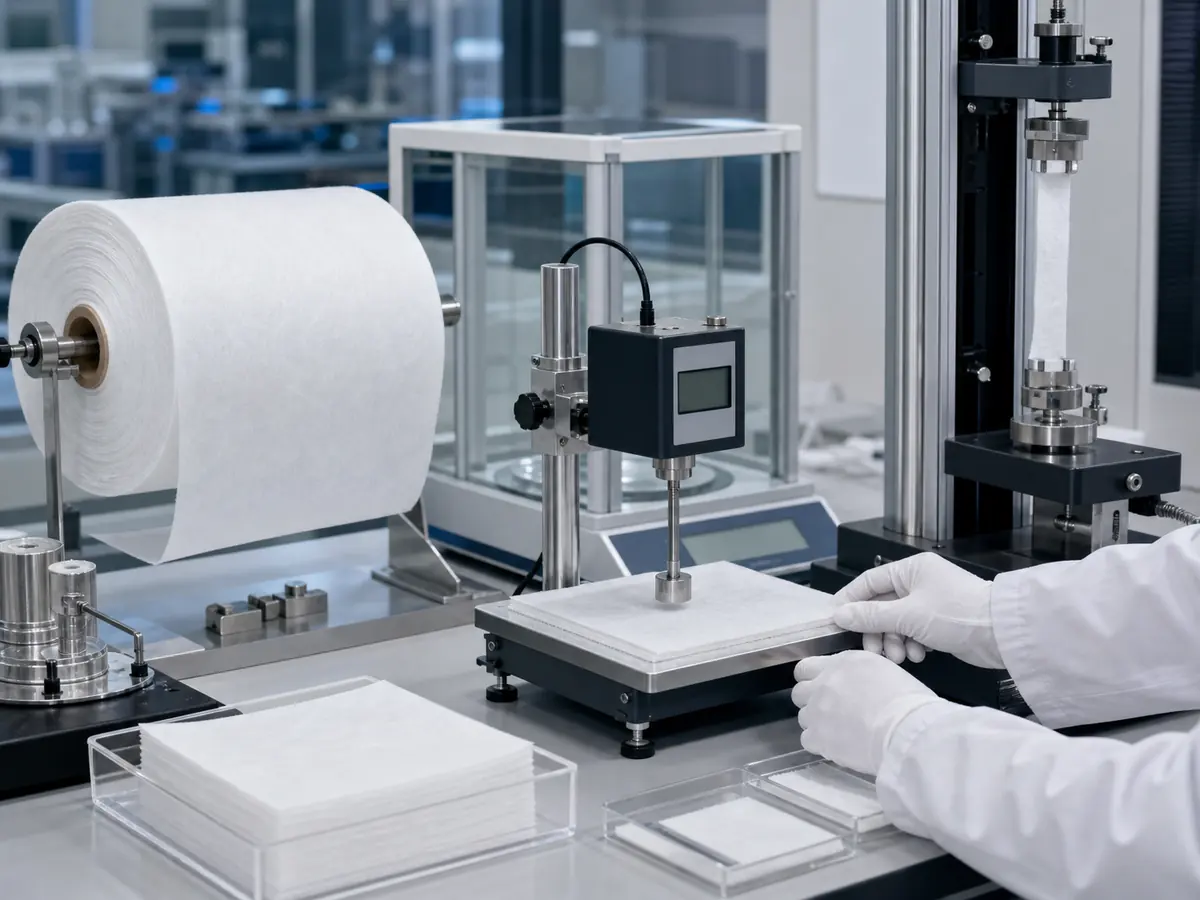
The working condition is the separator compressed between plates after electrolyte filling, not a dry sheet lying on a table. Insufficient compression can reduce contact stability, while excessive compression can change pore volume, electrolyte capacity and gas pathways. Published research supports reviewing compression and recovery behavior, but a percentage tested in one battery design should not be applied universally.
Oxygen Cycle
The separator also provides gas pathways for oxygen recombination
During charging, oxygen generated at the positive plate must travel through the separator structure to the negative plate and recombine into water. Electrolyte saturation, pore structure and compression therefore need to balance acid retention, ionic conduction and gas transport. Maximizing one property in isolation does not guarantee the right result for the battery.
Sample to Volume
Batch consistency is where assembly differences become visible
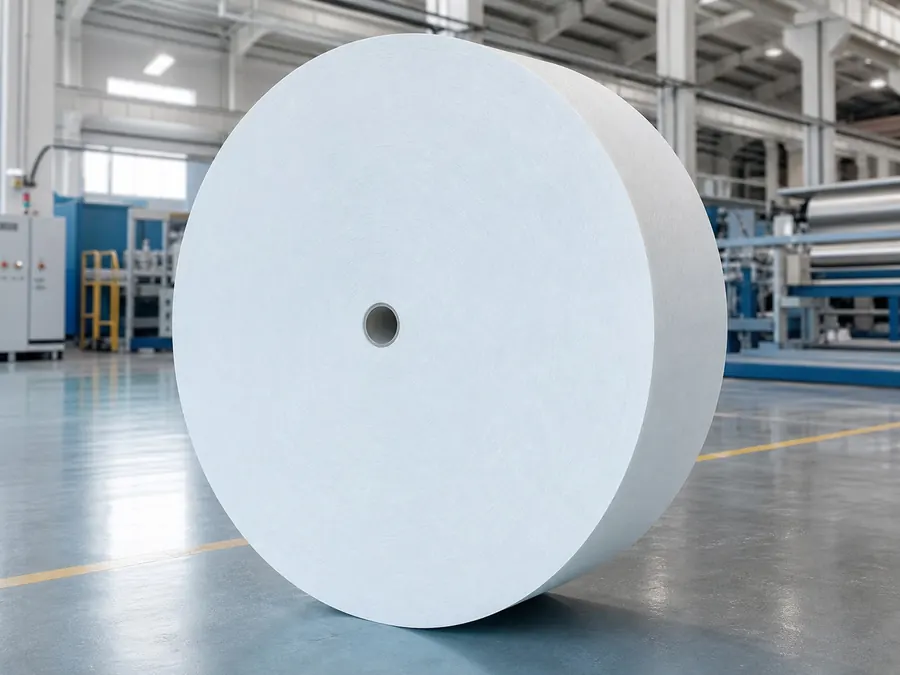
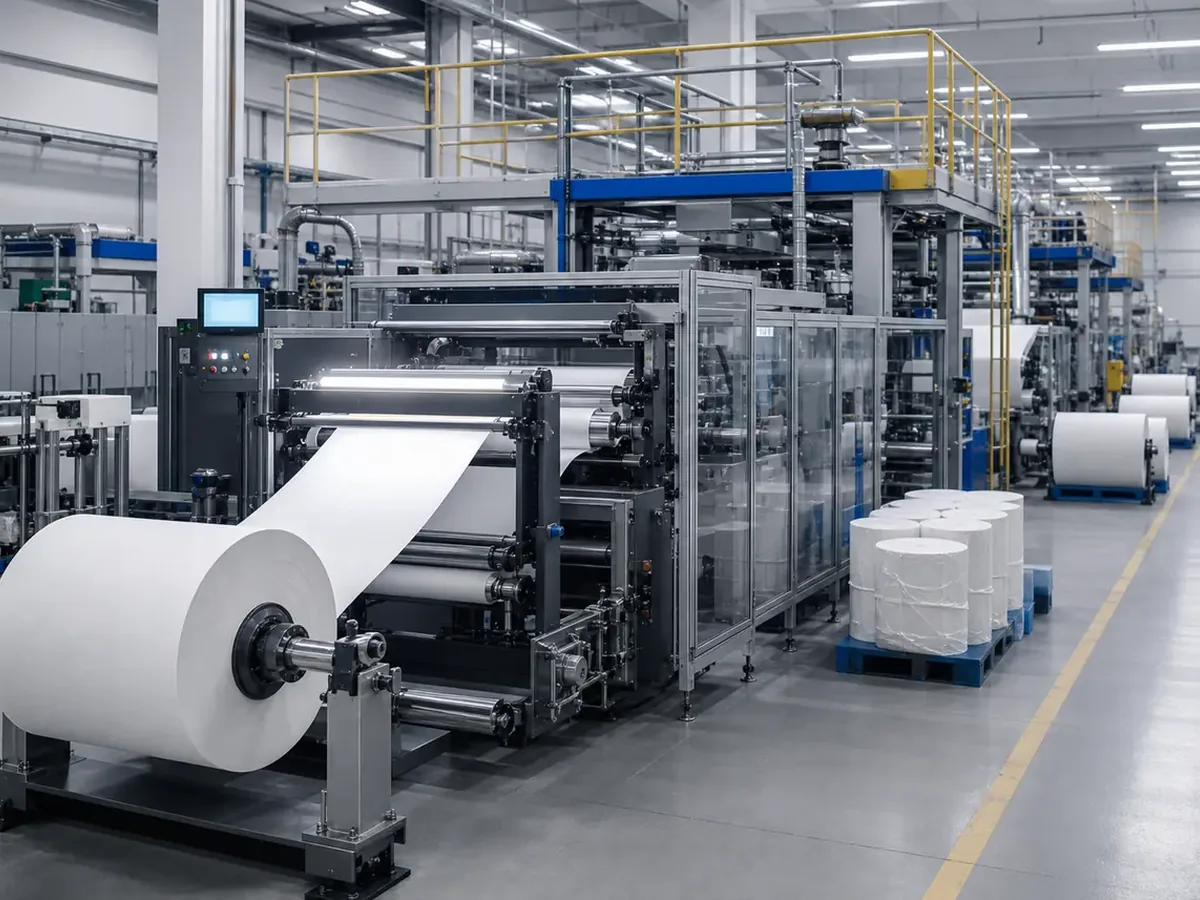
Roll width and winding condition, sheet dimensions, thickness, basis weight and packing all affect handling and assembly. Small deviations may be adjusted manually during sampling, but repeated variation becomes line adjustment, scrap and specification rework in volume production. A successful first sample is only the start; later batches must continue the same agreed supply logic.
Application Fit
UPS, telecom backup and energy storage require separate decisions
UPS projects often emphasize short-duration high-rate discharge and dependable activation after long float service. Telecom backup also considers backup duration, environment and maintenance conditions. Cyclic storage or lead-carbon applications introduce different cycling and electrolyte-management priorities. Battery application, capacity, plate or group dimensions, target compression and roll or sheet requirements should be clear before sampling.
Application
UPS, data center, telecom backup or cyclic energy storage.
Battery design
Capacity, plate or group dimensions and float-service conditions.
Compression
Target thickness, assembly gap, wet condition and recovery expectations.
Electrolyte behavior
Acid absorption, wetting time and the agreed test method.
Supply format
Roll width, core and diameter, or finished sheet dimensions.
Project stage
Initial sample, pilot assembly or recurring volume supply.