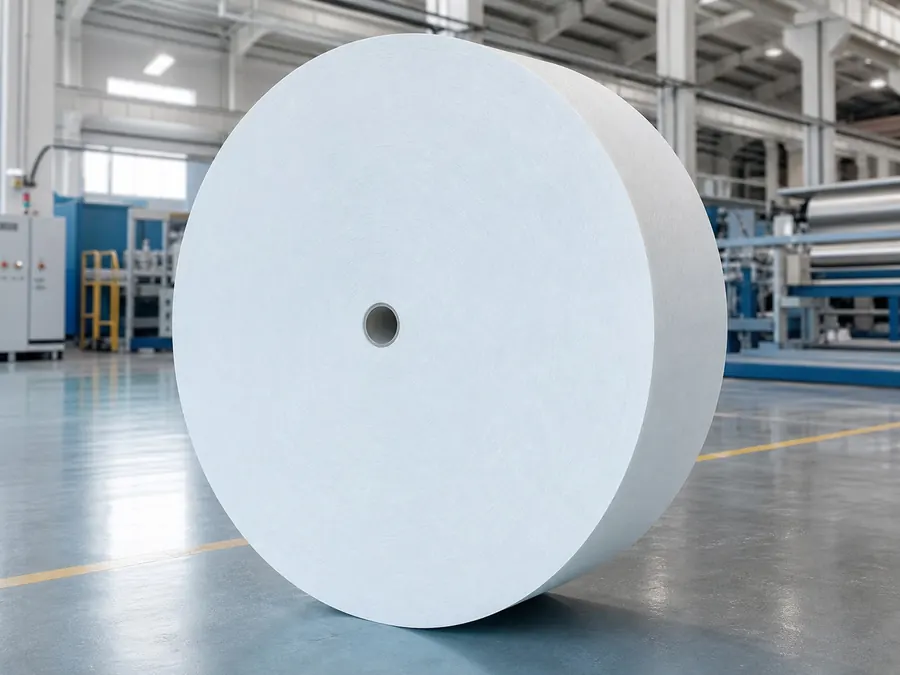

When evaluating AGM separators, buyers should look at a group of parameters rather than one single number. Thickness, basis weight, acid absorption behavior, electrical resistance, porosity and mechanical strength all affect how the separator works in a VRLA lead-acid battery.
The best specification depends on the customer’s battery design, plate spacing, assembly process and application requirements. Technical values should be reviewed together before sample or order confirmation.
Thickness and Dimensions
Thickness and size should match battery design
Thickness and dimensions are connected with plate spacing, compression, roll feeding, cutting and direct assembly. Buyers should confirm thickness, width or sheet size according to the battery structure and production process.
Basis Weight
Basis weight helps describe material mass and consistency
Basis weight is one way to discuss separator material mass and batch consistency. It should be reviewed together with thickness, separator structure and electrolyte-retention expectations.
Acid Absorption / Wetting
Acid-related behavior is tied to electrolyte retention
Acid absorption and wetting behavior are related to electrolyte retention and distribution inside the VRLA battery. The exact requirement should follow the customer’s battery design and test method.
Electrical Resistance
Electrical resistance affects ion movement in electrolyte
Electrical resistance reflects how the separator affects ion movement through the electrolyte. It should be reviewed with battery performance targets and agreed test conditions.
Porosity and Pore Structure
Porosity influences electrolyte movement
Porosity and pore structure influence electrolyte movement and separator function. Buyers should discuss these values together with acid-related behavior and battery application.
Mechanical Strength
Strength matters during handling, slitting and assembly
Mechanical strength is important during roll handling, slitting, cutting and battery assembly. The requirement should match the customer’s production workflow and separator format.
| Parameter | Buyer-friendly meaning |
|---|---|
| Thickness | Connected with plate spacing, compression and assembly requirements. |
| Basis weight | Used to discuss material mass and consistency. |
| Acid absorption / wetting | Related to electrolyte retention and distribution. |
| Electrical resistance | Reviewed with battery performance targets and test conditions. |
| Porosity | Influences electrolyte movement and separator function. |
| Mechanical strength | Important for handling, slitting, cutting and assembly. |