AGM separator sampling often stops at assembly: dry thickness is within tolerance, the plate group fits and initial compression matches the drawing. A battery, however, does not remain dry. Electrolyte filling changes the glass mat, and cycling repeatedly compresses and releases it.
The cited supplier material compares dry, post-filling and post-cycling retention. The useful lesson is methodological: a single incoming thickness value cannot describe long-term support. The cited conditions are comparison examples, not Viking specifications or universal battery-design targets.
Dry Thickness
A thickness result only answers the pre-assembly question
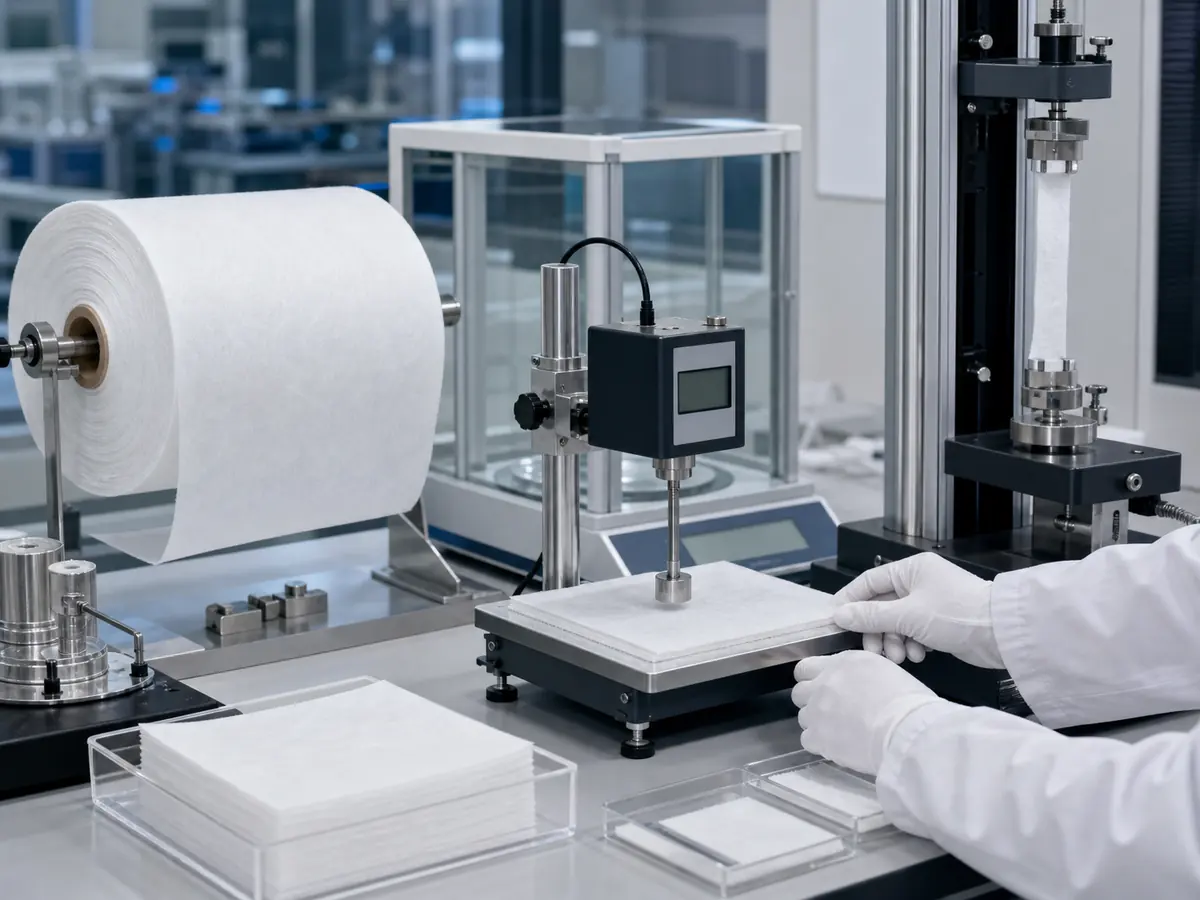
AGM is compressible, so every thickness value needs a measurement pressure. Two materials can show similar thickness at one pressure point while having different compression curves and recovery. The cited company presents a thickness-versus-pressure curve, a 1.25 mm insertion gap at 50 kPa for comparison, and product-table thickness measured at 10 kPa. Without the test pressure, plate thickness, separator layers and assembly gap, nominal thickness does not fully describe the installed state.
After Filling
Electrolyte filling is the first boundary for pressure change
Wetting can change interactions within the glass-fiber network, and published studies note that conventional mats may shrink after wetting, reducing plate-group force. A useful record therefore controls acid density, temperature, filling quantity and rest time, then states whether wet thickness or residual force is measured at constant pressure or constant gap. Results obtained under different conditions should not be compared as if they were equivalent.
After Cycling
Residual force after repeated compression is closer to the working condition
During battery operation, plates and separator experience structural change and repeated compression. The cited company also shows comparative retention after dry, filling and cycling stages, including a value labelled projected (proxy) after 10,000 cycles. That is a material-level proxy comparison, not a claim that every battery has completed 10,000 charge-discharge cycles. Battery life still depends on plates, grids, acid quantity, temperature, charging regime and assembly design.
Reproducible Sampling
A useful sample record should connect four stages
Incoming inspection, assembly, filling and cycling should use traceable conditions. The objective is not to collect the largest possible data table, but to make samples repeatable: record the batch and method, hold the assembly and electrolyte conditions constant, and relate separator retention to capacity, resistance and teardown observations from the complete battery.
Specification Coordination
Viking starts by aligning the test boundary, not comparing isolated numbers
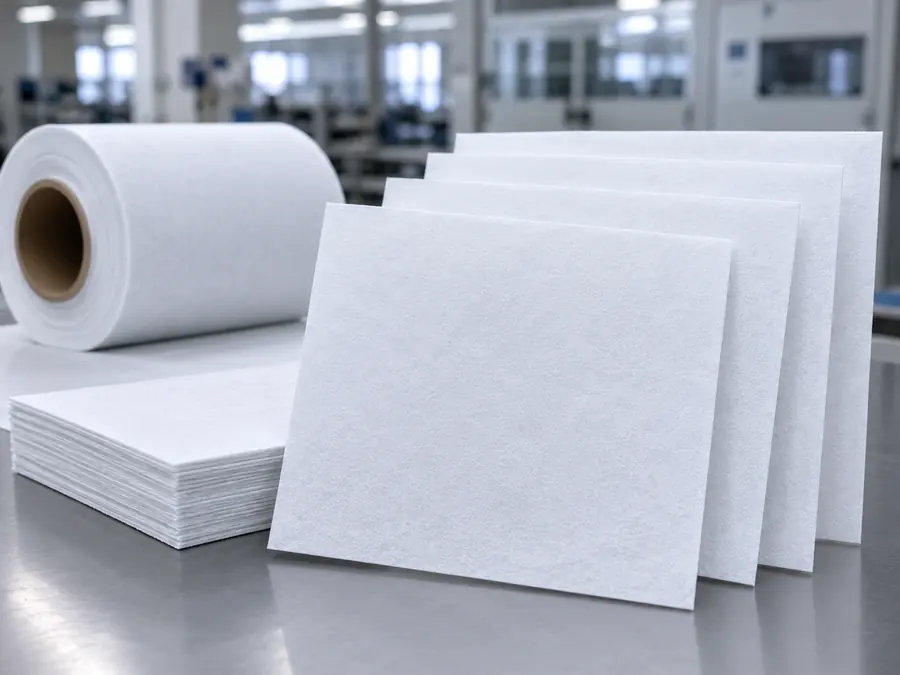
For VRLA applications, Viking supplies AGM separator rolls and sheets and can review thickness, width, sheet dimensions and packing. For compression and retention discussions, share the battery application, plate-group structure, design gap, target thickness, measurement pressure and any existing filling or cycling method. Suitability for volume use remains subject to the customer's material and complete-battery validation.
Incoming
Record batch, basis weight, dry thickness and the exact measurement pressure; add a compression curve when comparing materials.
Assembly
Record plate thickness, separator layers, design gap, target compression and actual insertion behavior.
After filling
Control acid density, temperature, quantity and rest time; state constant-pressure or constant-gap measurement.
After cycling
Record wet or dry state, compression limits, cycle count, frequency and temperature, then link retention to battery results.