At ELBC 2026, the cited company Founder & Chairman Dr. Dong Li described Asia's lead-acid battery market as adapting to demand supported by expanding data-center and telecom infrastructure, and by the continuing low-voltage role of lead-acid in many electric vehicles. This is the cited company's corporate market perspective, not an independent market-size report or a quantified forecast.
The useful engineering question is not whether lead-acid competes with every energy-storage route. It is whether a given system needs the standby or low-voltage duty that a specified battery architecture is designed to perform. AGM separator selection must then follow the individual battery design and complete-battery validation plan.
Source boundary
The cited company reports a market perspective, not a quantified demand study
The cited company event recap says its chairman linked new demand patterns in Asia to data-center and telecom infrastructure and to lead-acid's low-voltage role in many EVs. It supplies no market size, growth rate, adoption rate or split by application. This article therefore does not infer a regional forecast, project volume or customer demand from that statement.
Data center duty
A backup battery is selected around a standby-power system
In a data center or UPS architecture, battery duty can include maintaining standby readiness and providing backup power when the system calls for it. Battery technology, discharge profile, runtime, maintenance approach and site design are system decisions. Not every data center uses the same battery chemistry or VRLA configuration.
EV duty
An EV low-voltage battery is an auxiliary-system decision
Many electric vehicles retain a low-voltage electrical system, but the battery architecture varies by vehicle, market and manufacturer. A lead-acid AGM battery may be considered for a low-voltage role in some designs; this does not mean every EV uses AGM or lead-acid, nor that it replaces the traction battery.
Comparison
The two applications share a reliability question, not one universal specification
Data-center backup discussions may focus on standby state, discharge duty, service access and system maintenance. Vehicle discussions may add packaging, temperature exposure, vibration, compression and vehicle electrical integration. For both, material measurements must be tied to the actual battery design, agreed test conditions and complete-battery verification.
AGM separator boundary
A separator participates in battery performance; it does not decide it alone
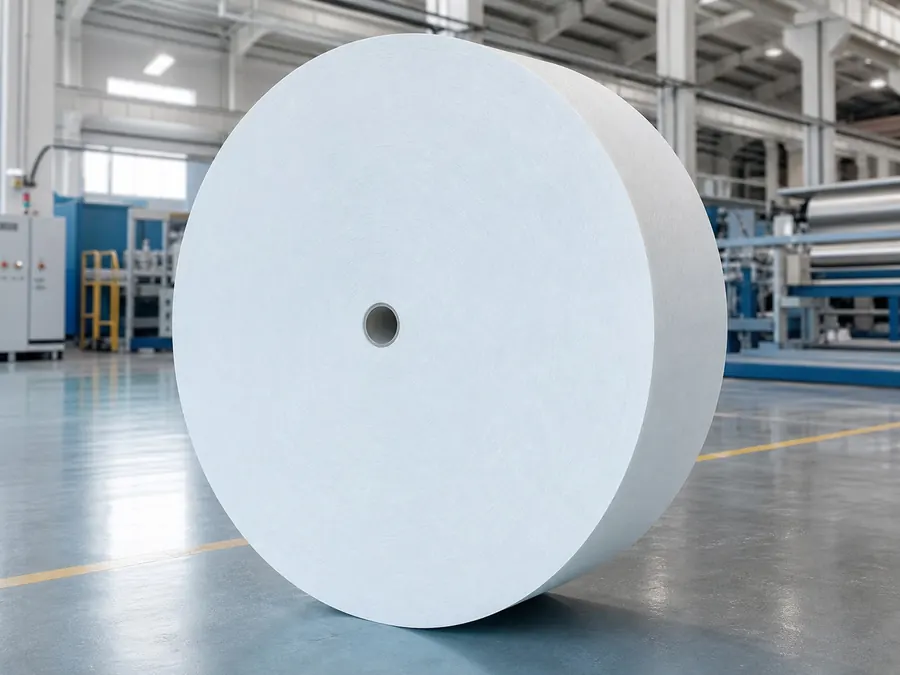
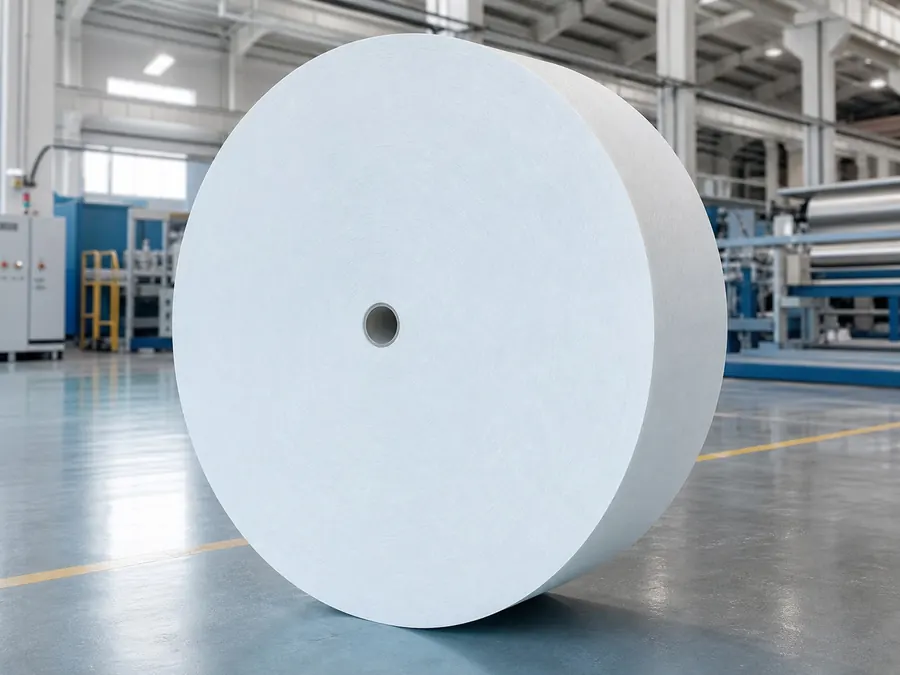
AGM separator thickness, basis weight, absorption-related behaviour, electrical resistance, compression response, roll or sheet dimensions and batch records can be discussed for a battery project. Those material details cannot independently demonstrate capacity, life, cost, reliability, vehicle compatibility or UPS performance. Plate design, electrolyte, assembly, charging, temperature and system controls also matter.
Specification match
Start with the application, structure and target operating conditions
For a sample and specification discussion, identify the application, battery structure, low-voltage or standby duty, target dimensions, roll or sheet format, assembly conditions, relevant temperature or vibration conditions, agreed material checks and complete-battery validation stage. Viking can discuss AGM separator supply specifications; the battery maker and customer remain responsible for complete-battery and system validation.
Application
Data-center or UPS backup, EV low-voltage system, or another defined battery duty.
Battery structure
Plate-group dimensions, target compression and electrolyte/assembly conditions.
Operating conditions
Standby/discharge duty, temperature, vibration or service conditions relevant to the project.
Material evidence
Agreed dimensions, test method, sample state and batch records.
Validation
Complete-battery and system test scope, result owner and project stage.