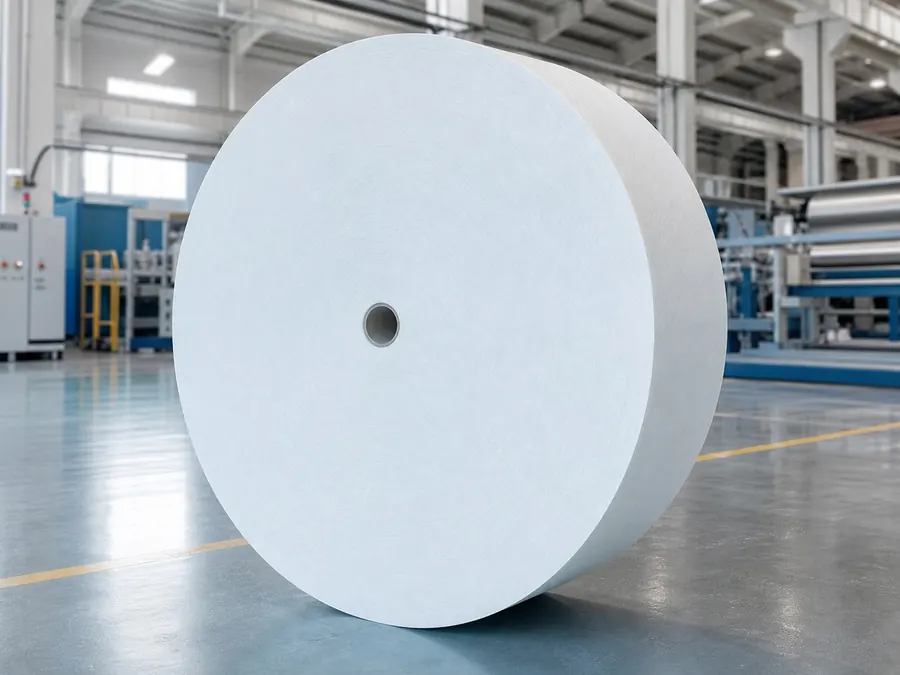
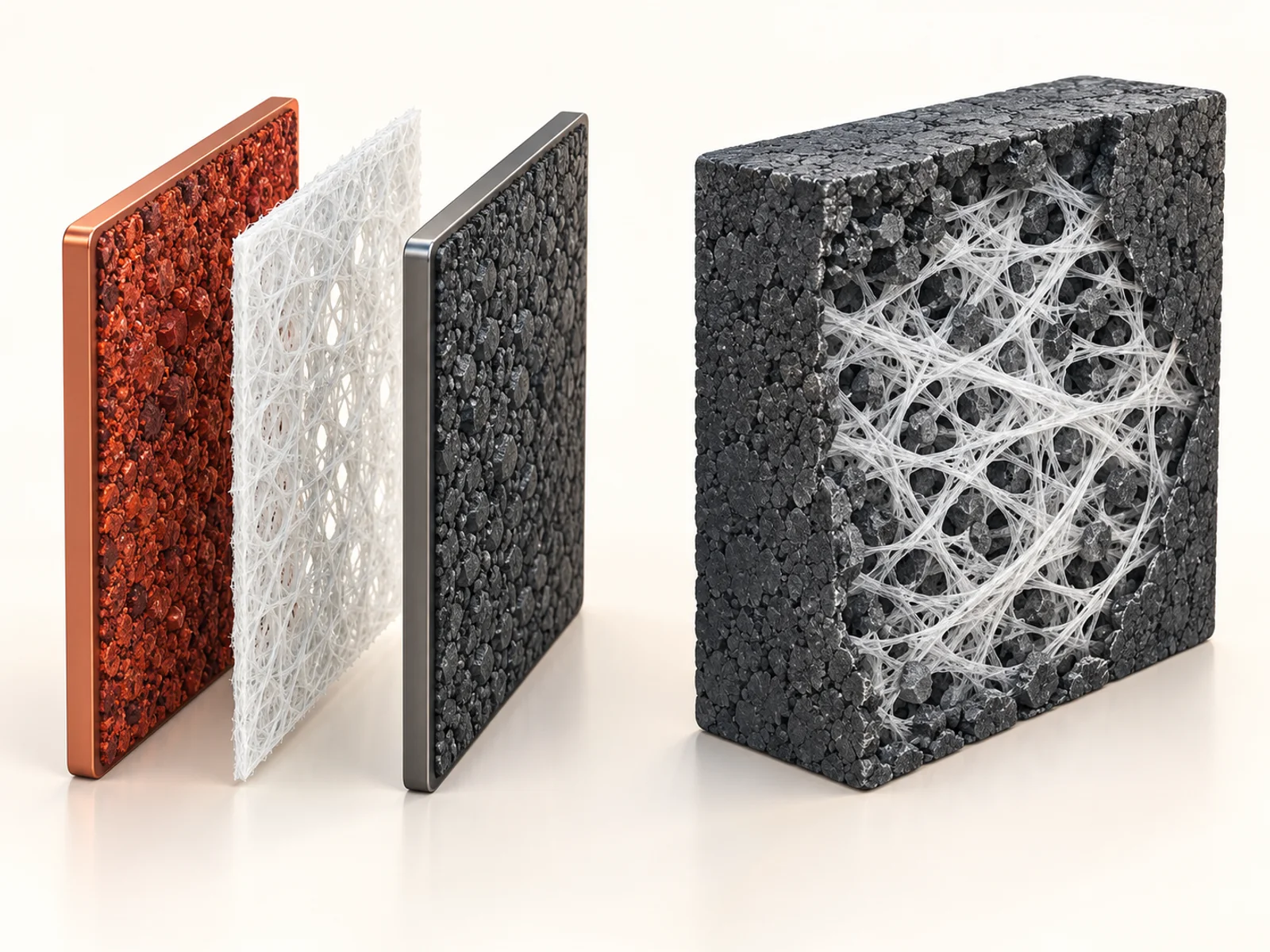
An AGM separator sits between positive and negative plates. Glass Electrode Material (GEM) enters negative active material and becomes part of the negative-electrode structure. A shared raw-material family does not make their location, function or evaluation conditions the same.
Similar fibers do not make materials interchangeable
Similar fibers do not make materials interchangeable
Location
- AGM
- Between positive and negative plates
- GEM
- Inside negative active material
Main role
- AGM
- Separation, electrolyte retention and ion transport
- GEM
- Three-dimensional support; an alternative to a lead grid
Design focus
- AGM
- Separator specification, absorption, compression and battery fit
- GEM
- Negative-electrode integration and manufacturing process
Start with the material’s location
Start with the material’s location
An AGM separator sits between positive and negative plates. Glass Electrode Material (GEM) enters negative active material and becomes part of the negative-electrode structure. A shared raw-material family does not make their location, function or evaluation conditions the same.
AGM separators work between the plates
AGM separators work between the plates
In VRLA-AGM batteries, the separator isolates electrodes, retains electrolyte, provides an ion-transport path and participates in the internal oxygen cycle. Evaluate dimensions and basis weight together with absorption, compression, plate contact and batch stability in relation to the battery design.
GEM becomes part of the negative electrode
GEM becomes part of the negative electrode
ArcActive and H&V describe GEM as a glass-fiber-based negative-electrode material forming a three-dimensional support with negative active material, presented as an alternative to a conventional lead grid. H&V says its relatively open pores allow active material to enter. These are developer descriptions, not independently verified Viking results.
Similar fibers do not make materials interchangeable
Similar fibers do not make materials interchangeable
AGM selection follows separator position and battery architecture. GEM evaluation concerns negative-electrode design, integration with active material and manufacturing process. Neither material should be treated as a substitute for the other solely because both use glass fiber. Compare each under its corresponding structural and test conditions.
A reported pilot is not proof of scale
A reported pilot is not proof of scale
ArcActive states that it jointly developed GEM with H&V in 2024. Its undated homepage reports its first pilot-scale containerized storage system operating at Deakin University’s Waurn Ponds microgrid in Australia in collaboration with Origin Zero. This company disclosure reports a pilot; it does not establish large-scale commercialization.
Viking’s product boundary and your next step
Viking’s product boundary and your next step
Viking focuses on AGM separators and can discuss rolls, sheets and dimensional requirements. GEM is discussed only to clarify structural roles; Viking makes no GEM supply, development or performance commitment. First define the material application and battery structure, then review specification compatibility and validation conditions.