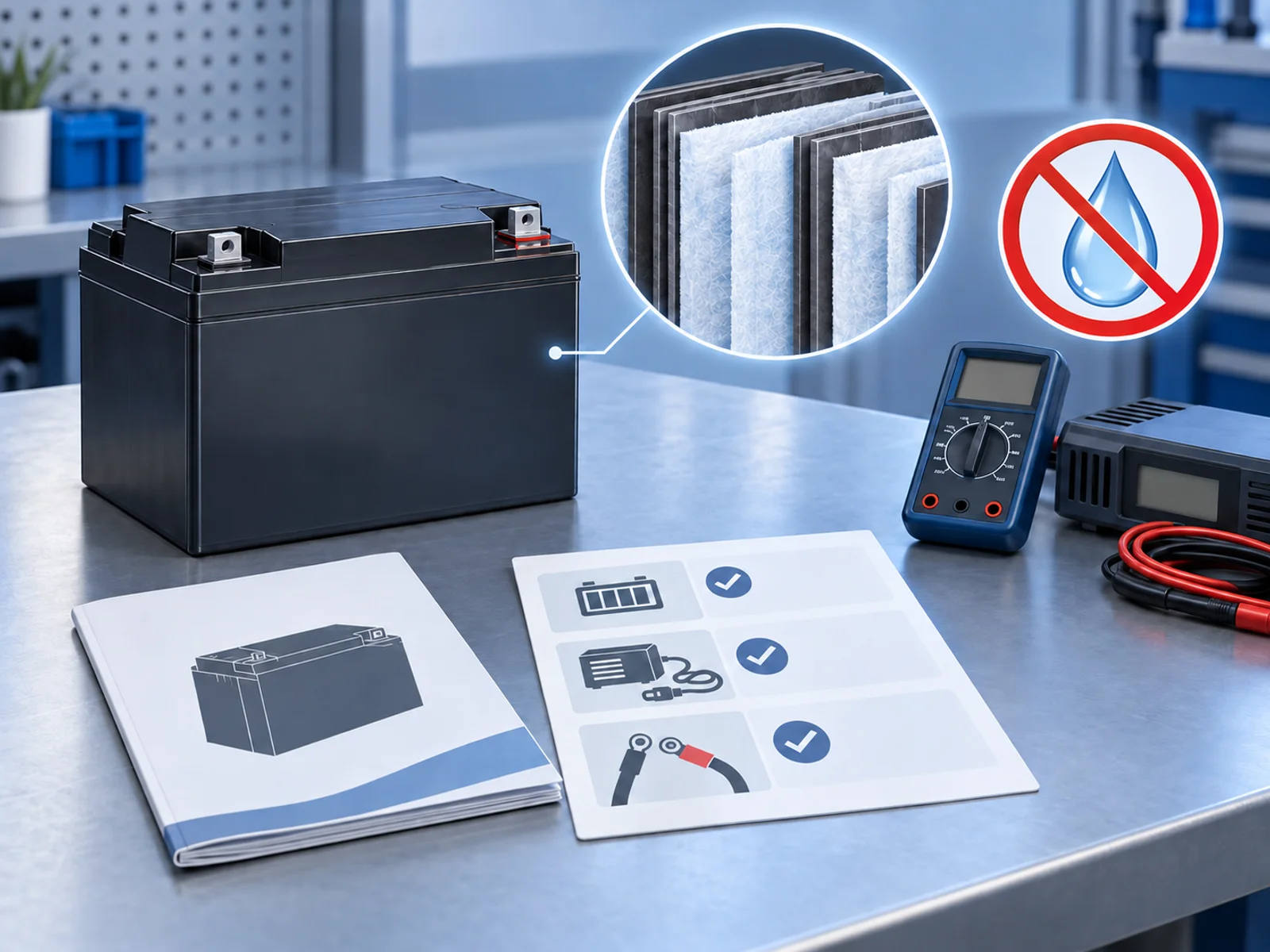
Before adding anything to a lead-acid battery, identify its construction and check the manufacturer's instructions for the exact model. Some flooded batteries have maintainable electrolyte levels. AGM batteries use a VRLA design that retains electrolyte within the separator and is not intended for routine fluid top-ups.
Battery construction
Flooded and AGM batteries need different maintenance approaches
Some flooded lead-acid batteries have accessible electrolyte levels, with inspection and maintenance procedures defined by the manufacturer. Do not infer permission to top up from the appearance of the case. In AGM construction, the glass-fiber separator holds electrolyte within the plate group rather than leaving a free-liquid layer for routine observation or replenishment. Flooded-battery practices should not be applied to every lead-acid design.
Exact model instructions
Read the manual before adding any substance
Trojan's guidance for AES AGM batteries says not to add water, acid or additives, and not to remove or alter the vent valve caps. These requirements apply to the products specified by Trojan. Other batteries should be handled according to their own model-specific documentation. If the construction or model cannot be identified, ask the manufacturer or a qualified service provider before intervening. A general lead-acid description is not a maintenance procedure.
Diagnosis first
Reduced runtime does not prove that fluid is low
A battery that no longer lasts as long may need an assessment of its condition, charging equipment and connections, rather than an assumption about fluid level. Trojan notes that both undercharging and overcharging can reduce battery life. Record the model, observed runtime change and charging history to support diagnosis; the methods and acceptance criteria should follow the manufacturer. Adding fluid cannot replace fault diagnosis or guarantee recovery of capacity that has already deteriorated.
Warning signs
Stop using a battery that is swollen, leaking or unusually hot
If the case is swollen or leaking, or the battery becomes unusually hot, stop using it and contact the manufacturer or a qualified service provider. These signs call for assessment, not an attempt to add fluid. Do not pry open the case, mix acid or inject fluid into a sealed battery. This article does not provide case-opening procedures or recovery formulations.
Separator matching
Viking supports separator specifications for battery manufacturers
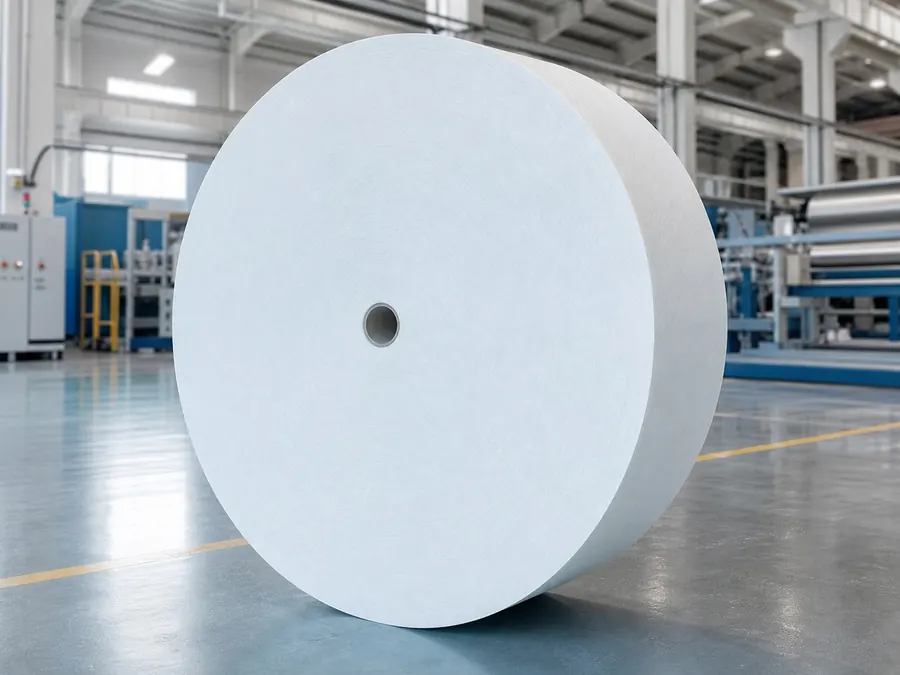
Viking supplies AGM separators and supports specification discussions with battery manufacturers and material-selection teams. Electrolyte retention and plate separation must be assessed with the intended application and battery construction. Share the plate-group structure, thickness, width or sheet dimensions, compression and test conditions to begin sample discussions. Selecting separator material does not diagnose or guarantee recovery of a weak battery already in service.