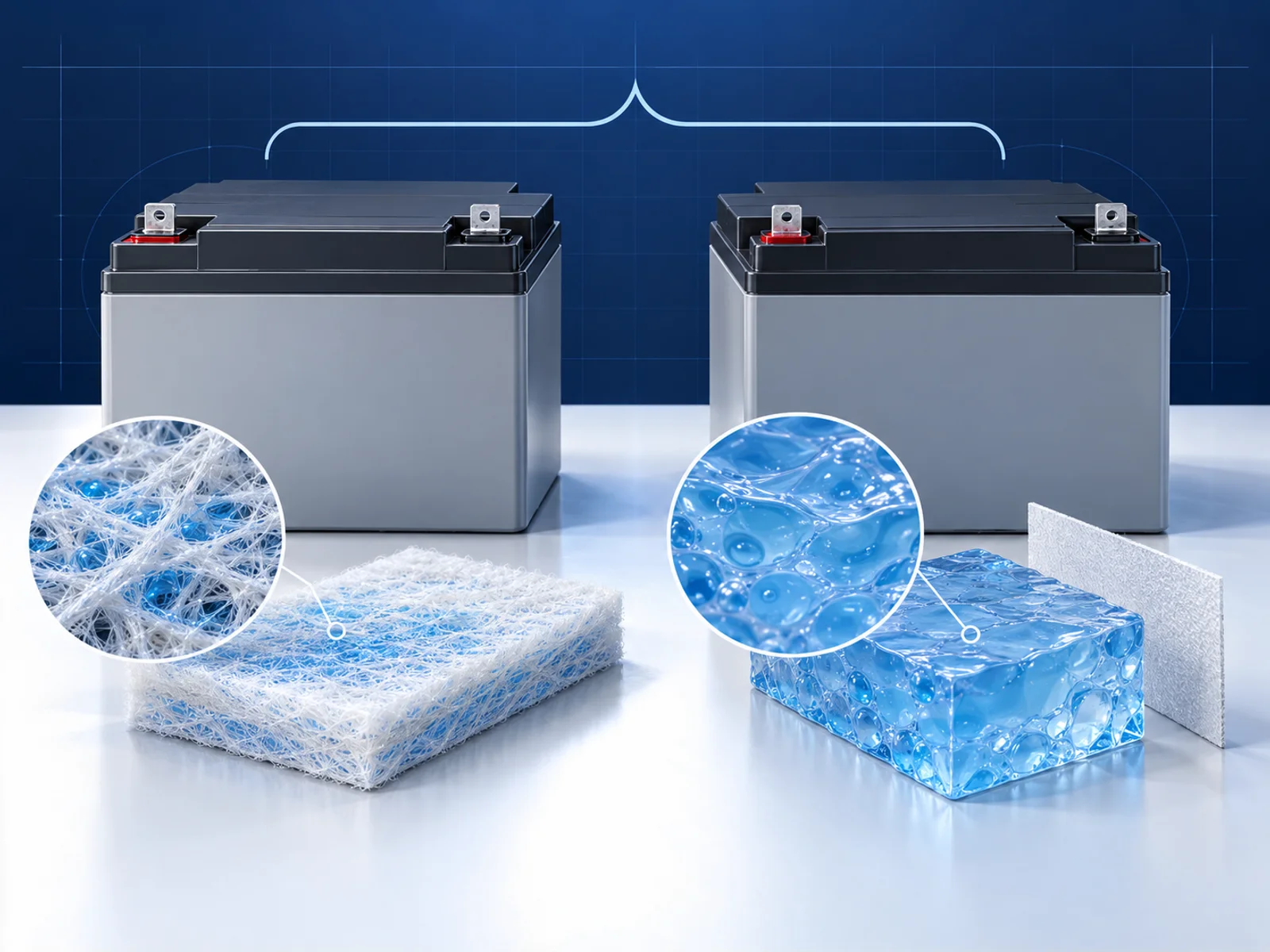
A battery label may say VRLA while revealing little about how the electrolyte is immobilized inside. AGM and GEL are both common forms of valve-regulated lead-acid batteries, but their electrolyte states and internal structures differ. The VRLA label alone cannot establish whether a separator is suitable or interchangeable.
VRLA identifies a category, not one internal structure
VRLA identifies a category, not one internal structure
VRLA stands for Valve Regulated Lead Acid and describes a category of lead-acid batteries with a valve-regulated design. Victron’s technical literature explains that a safety valve manages internal gas. Gas may still be released through the valve during overcharging or a cell failure, so “valve regulated” should not be read as “never vents.” AGM and GEL provide another level of information. Both are common VRLA forms, but they refer to different electrolyte-immobilization structures. In practical terms, lead acid identifies the chemistry, VRLA identifies the valve-regulated category, and AGM or GEL further describes how the electrolyte is held. These terms answer different questions and are not interchangeable.
AGM uses a glass-fiber separator to hold electrolyte
AGM uses a glass-fiber separator to hold electrolyte
AGM stands for Absorbent Glass Mat. According to Victron, the electrolyte in an AGM battery is absorbed by the glass-fiber mat between the plates through capillary action. The separator therefore performs more than physical separation. It keeps the positive and negative plates apart while also participating in electrolyte retention and distribution within the plate group. This makes the AGM separator part of the battery’s internal design rather than an independent pad that can be specified without context. Its specification must work with the plate group, electrolyte design, and manufacturing process. The term “AGM” alone does not define one universal set of separator parameters.
GEL fixes the electrolyte in a gel state
GEL fixes the electrolyte in a gel state
In a GEL battery, the electrolyte is immobilized in a gel state. This differs from the capillary retention mechanism used in AGM batteries, and the internal materials must suit the product’s particular construction. A GEL battery still requires separation between the positive and negative electrodes. Battery Council International explains that battery separators keep the electrodes apart while allowing ions to pass, and that separator materials and structures vary with battery technology. BCI also identifies separators intended for gel lead-acid batteries. The useful distinction is therefore not that one structure has a separator while the other does not. AGM and GEL immobilize electrolyte differently, while their separation components must perform the required electrical-isolation and ion-transport functions within their respective designs. Individual products may also use different or combined internal arrangements, so the model-specific technical documentation remains decisive.
Similar functions do not make the structures interchangeable
Similar functions do not make the structures interchangeable
AGM and GEL batteries both need electrical separation between the electrodes and a path for ionic movement. Those shared functions do not establish that their separator materials or structures can be exchanged. In an AGM battery, the glass-fiber separator also retains electrolyte. In a GEL product, the separation structure must operate with gelled electrolyte and the complete battery design. BCI’s separate discussion of AGM and gel-battery separators reflects this need for technical matching; it does not establish an absolute rule that a material can never appear in another design. External similarity is also insufficient evidence. Two batteries may have the same rated voltage or similar dimensions while using different electrolyte-immobilization methods, separation structures, and material environments. Any material change may affect its interaction with the plates and the manufacturing process. Suitability must therefore be confirmed within the complete battery design.
Structure names do not establish a universal performance ranking
Structure names do not establish a universal performance ranking
AGM and GEL should not be placed in a universal hierarchy based only on their names. Performance descriptions for particular product series—including service life, rate capability, or other characteristics—apply to those products and their stated conditions. They should not be extended to every AGM or GEL battery. The appropriate route depends on the model, design objective, and operating conditions. Product data and manufacturer validation remain more useful than a general conclusion based on the structure name alone.
Clarify the battery structure before discussing material specifications
Clarify the battery structure before discussing material specifications
In development, procurement, and channel communication, “VRLA” is only a starting point. Before discussing separator specifications, confirm whether the battery uses an AGM or GEL structure, how the electrolyte is immobilized, what function the separation component performs, and what manufacturing requirements apply. Terms such as “sealed” or “maintenance-free” still do not identify the internal structure. Use the model’s specification sheet, technical documentation, or structure information confirmed by the battery manufacturer. If different documents describe the same model inconsistently, the manufacturer should confirm which description is current. Material discussions should also be tied to a specific product and application. Relevant information normally includes the battery model, technical route, intended function of the separation component, applicable dimensions or material requirements, and manufacturing compatibility conditions. A proprietary formulation does not need to be disclosed merely to establish the structure type and intended material function.
Viking Technology’s scope
Viking Technology’s scope
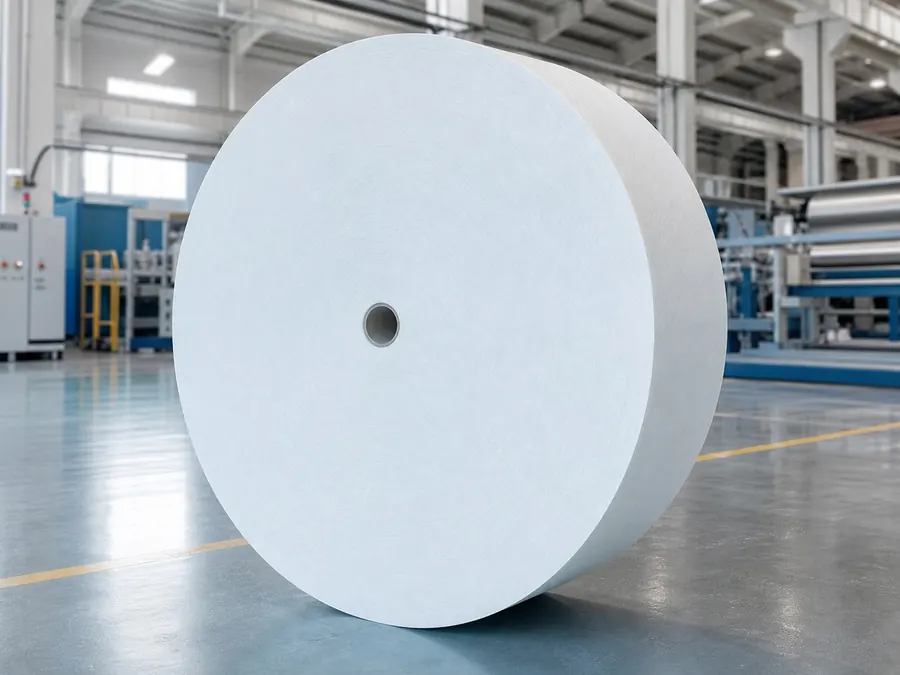
Viking Technology focuses on AGM glass-fiber separators and specification discussions for battery manufacturers. Matching a separator to a particular battery requires the customer’s confirmed battery structure, intended material function, and manufacturing requirements. This scope does not mean that Viking manufactures complete GEL batteries, and separator matching does not replace the battery manufacturer’s complete product design and validation. A material’s basic function alone cannot provide certification, service-life, or performance guarantees for the finished battery. Battery manufacturers can send Viking Technology their confirmed battery structure and material requirements to discuss AGM separator specification matching.
FAQ 1
Does a VRLA label mean the battery uses AGM?
No. VRLA describes the valve-regulated lead-acid category. Confirm AGM, GEL or another model-specific internal arrangement in the manufacturer’s current documentation.
FAQ 2
Do GEL batteries need a separator?
They still need electrode separation and ion transport. Their separation components must work with gelled electrolyte and the complete product design.
FAQ 3
Can AGM and GEL separator materials be exchanged directly?
Shared functions do not prove interchangeability. Verify the intended material function, electrolyte structure, plate group and manufacturing compatibility within the complete battery design.